Rematerialising Typography
Context
My masters thesis investigated the question, “How can generative design influence typography and transcend a digital format into a tangible setting?” The project bridged my interests across typography, publication, digital tools and print. I was interested in what happens when type is shaped through systems and code, then brought back into a physical format that people can hold, study and keep.
At the beginning of this practice-based thesis I focused on developing coding skills that could genuinely support the research. This shifted the project towards human-computer collaboration methodologies and literature involving cybernetics. The aim was to use computation as a method for making and testing typographic outcomes at scale.
Challenge
This research was developed before AI became what it is today, so the generative approach had to be built from the ground up with Javascript (Processing) rather than relying on contemporary AI tools.
I needed the generative system to do real typographic work, not just produce decorative variation. The output had to be coherent enough to function as a set of type families, and consistent enough to be organised into a publication that people could actually read and compare.
Solution
All generative methods in the thesis were driven by a JavaScript program I developed. This program became the engine for producing typographic variations and shaped the direction of the project through a disciplined, repeatable process.
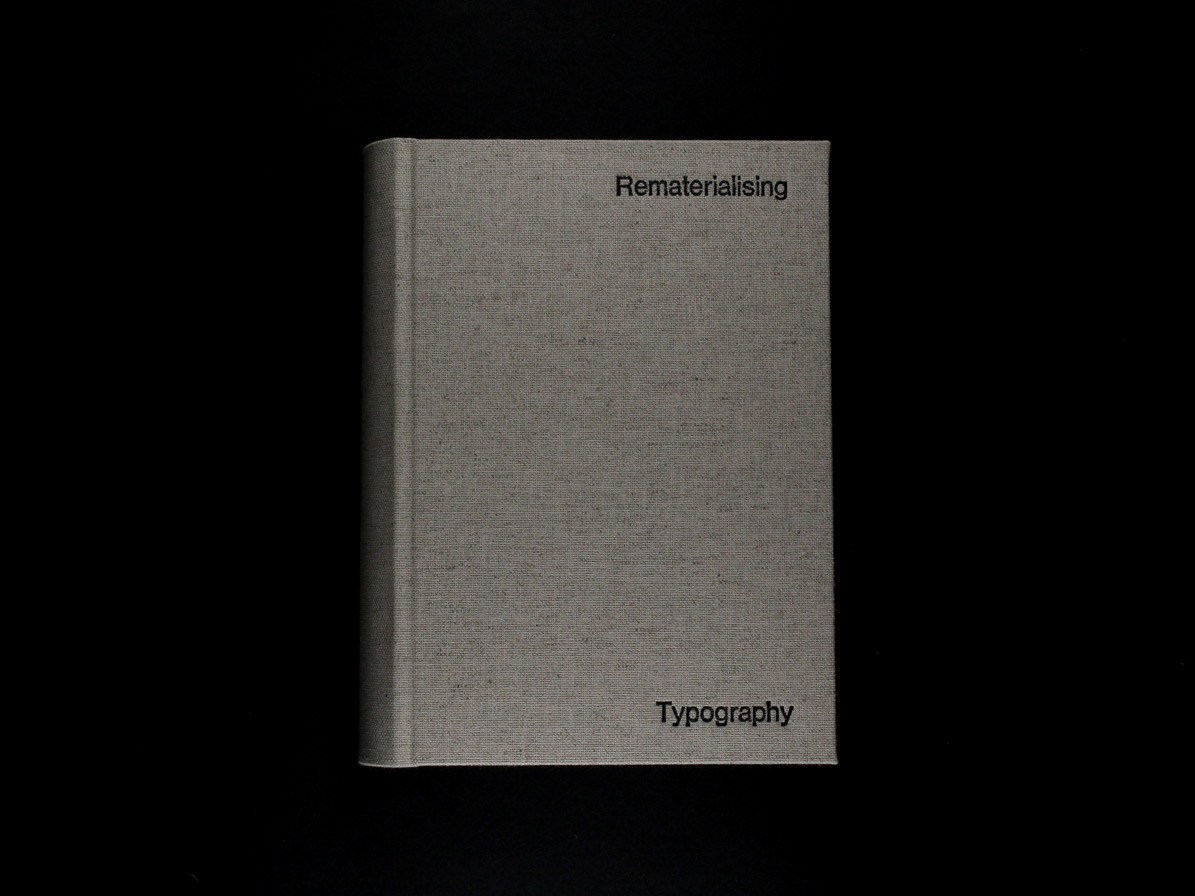
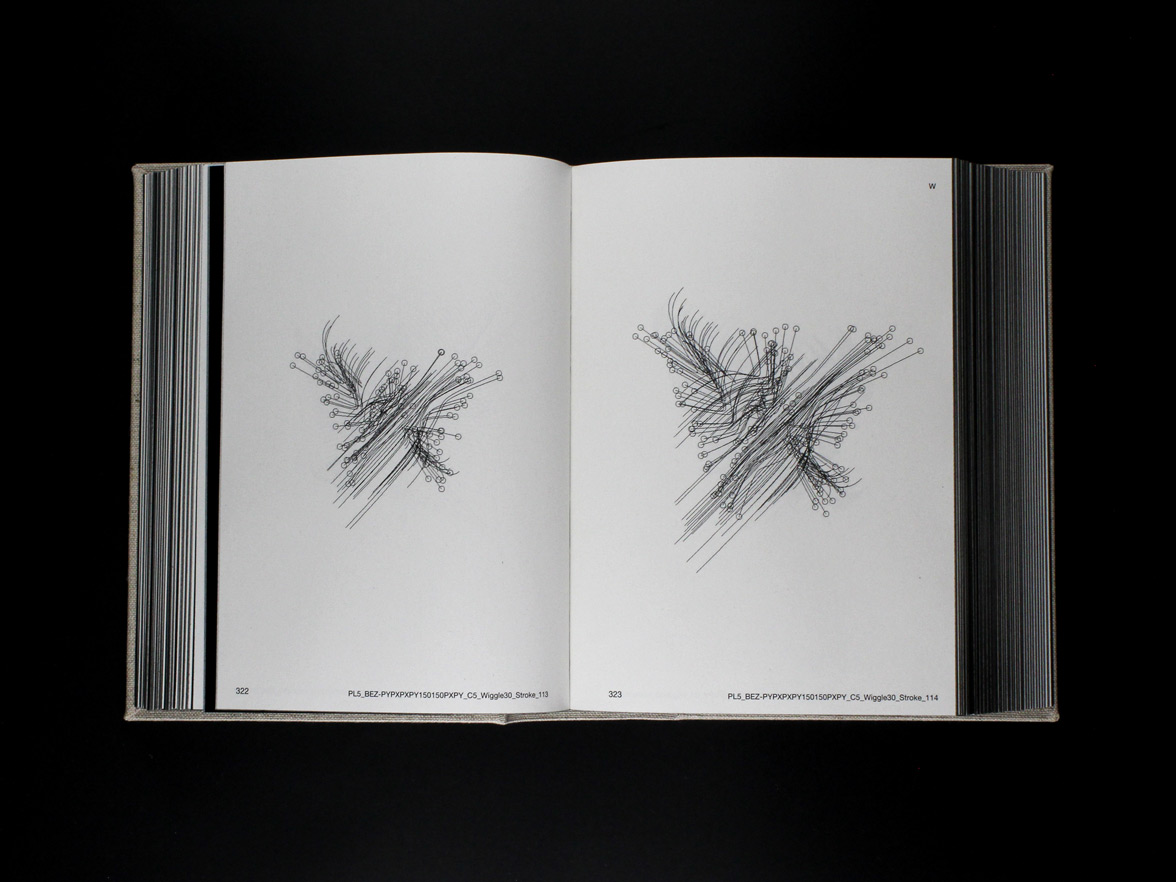
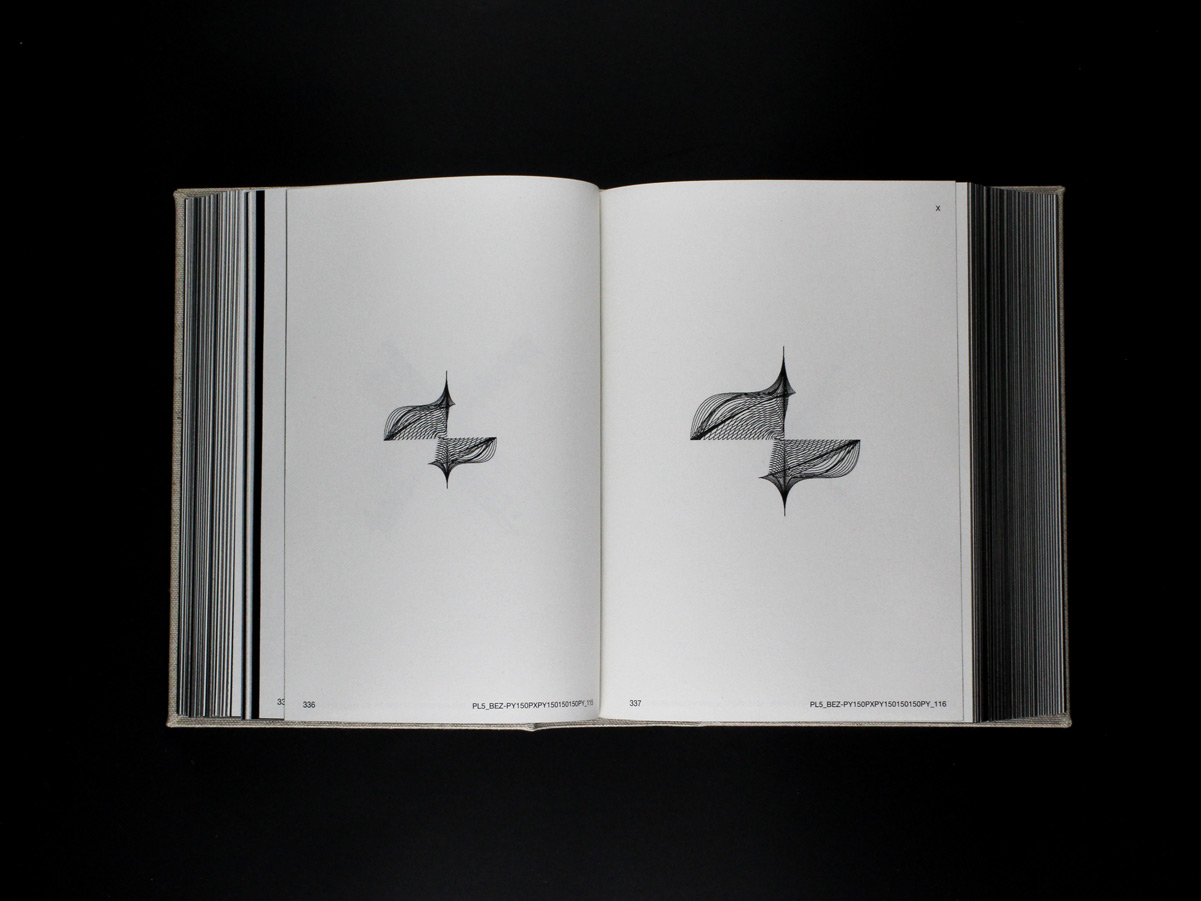
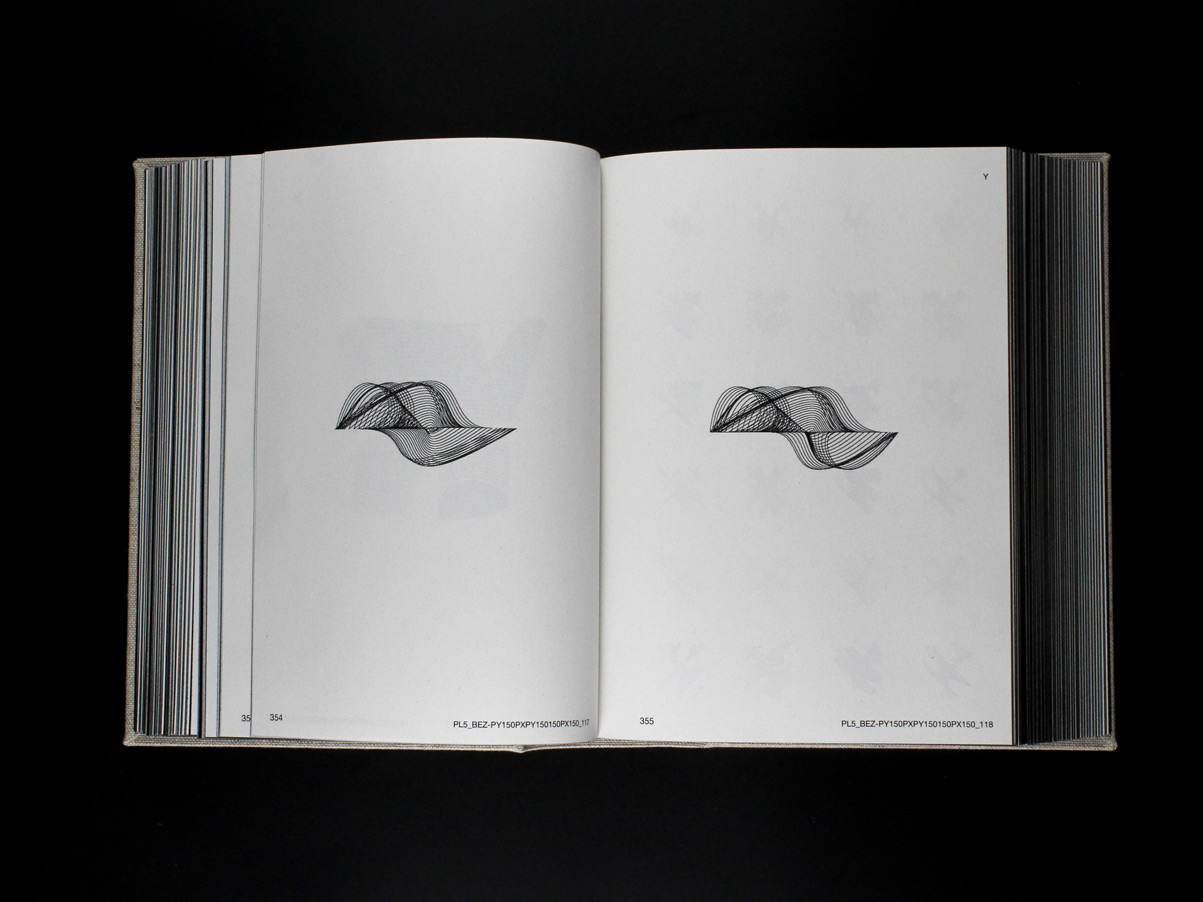
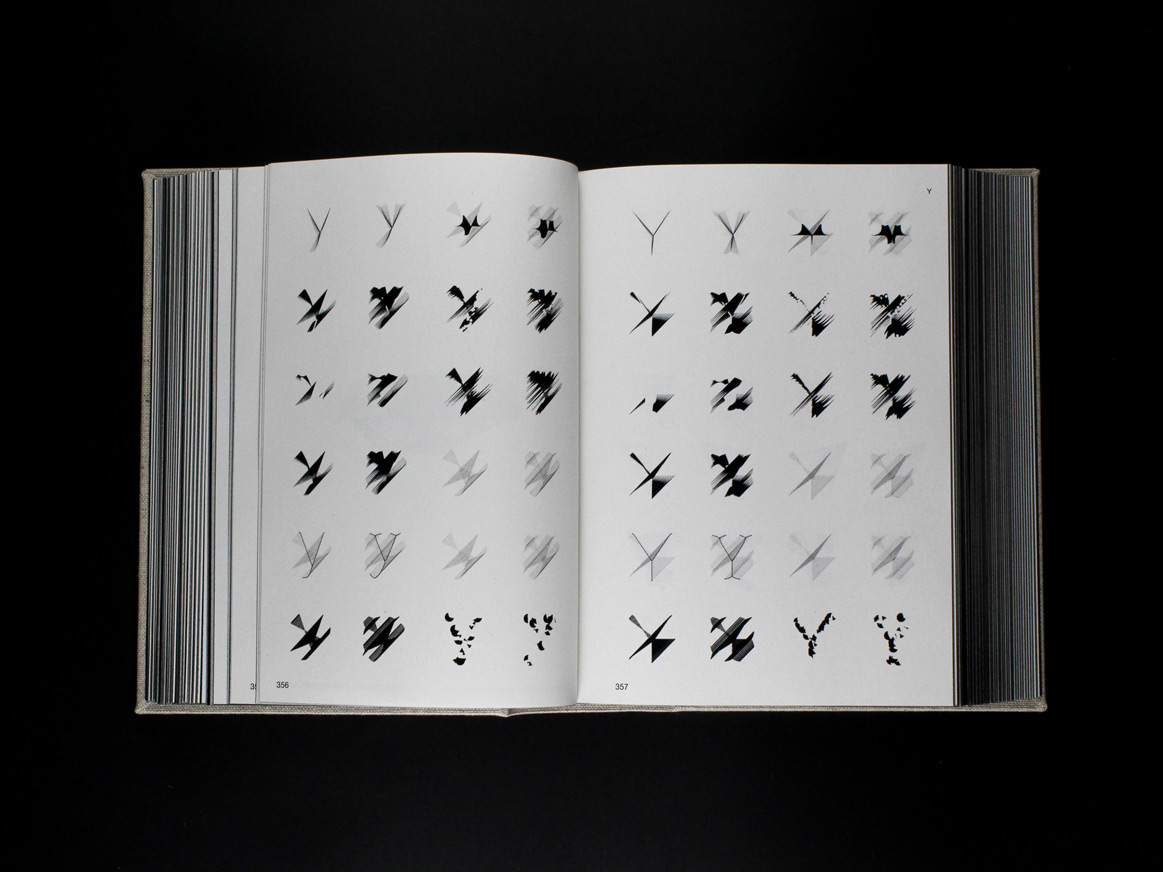
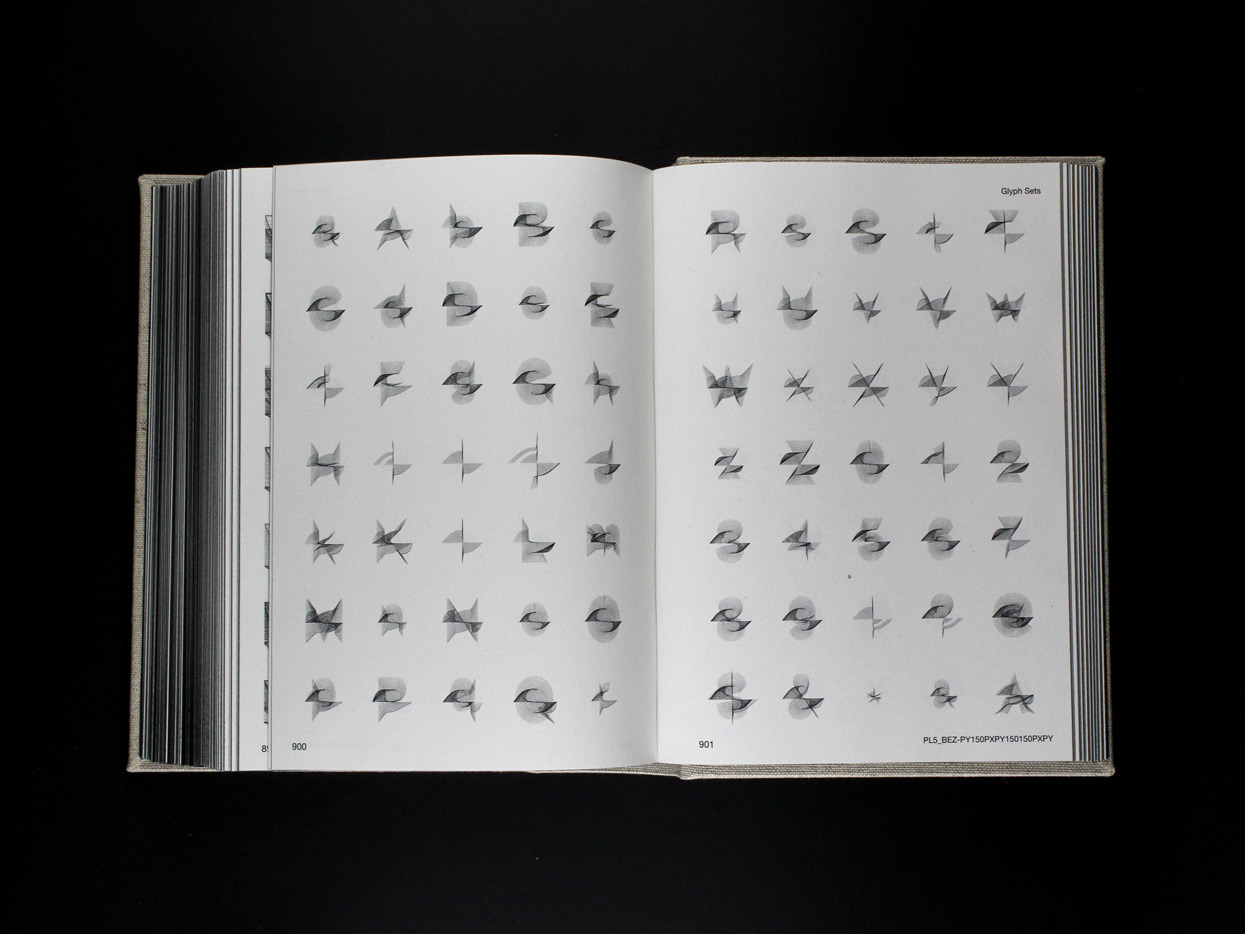
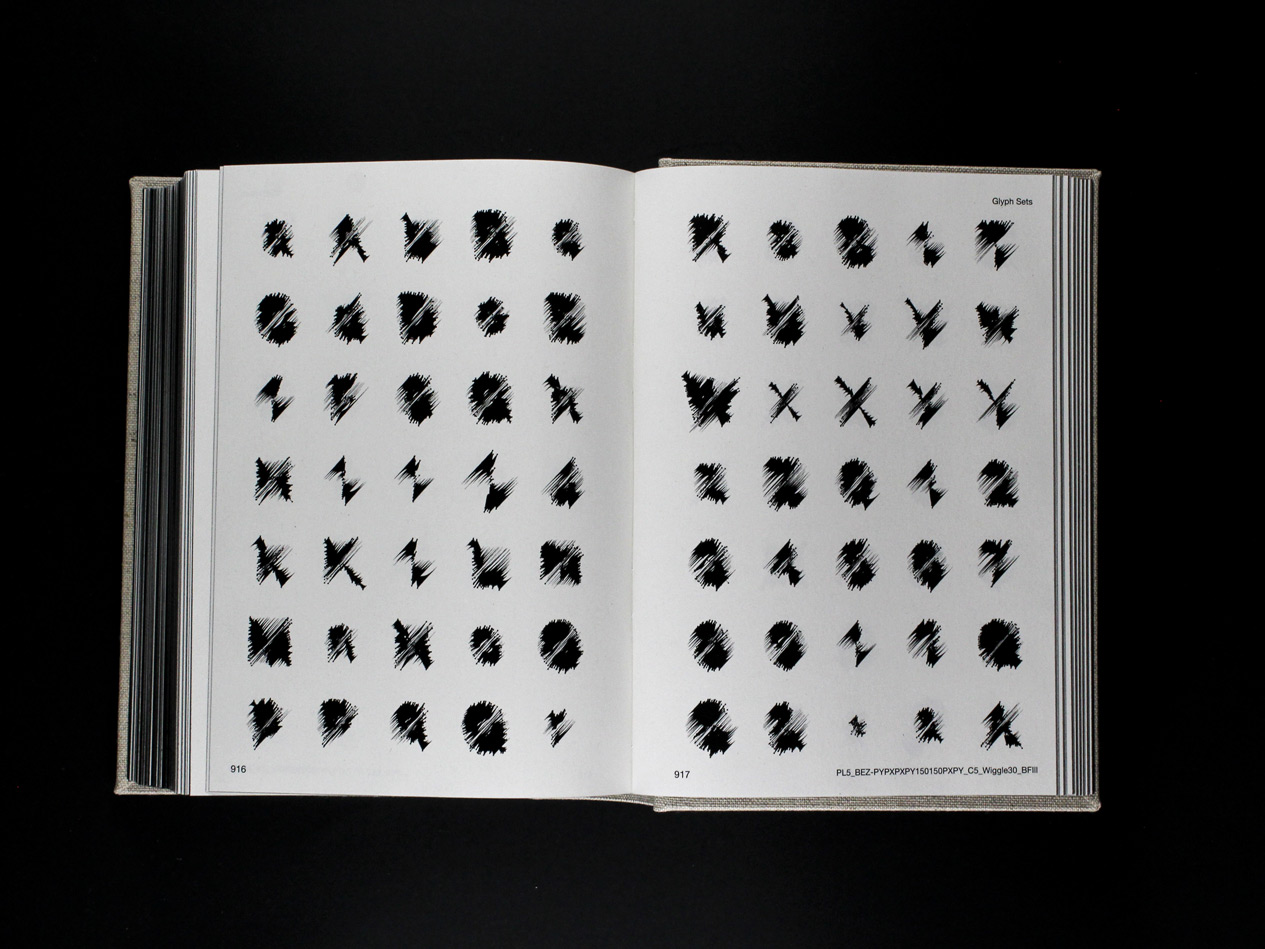
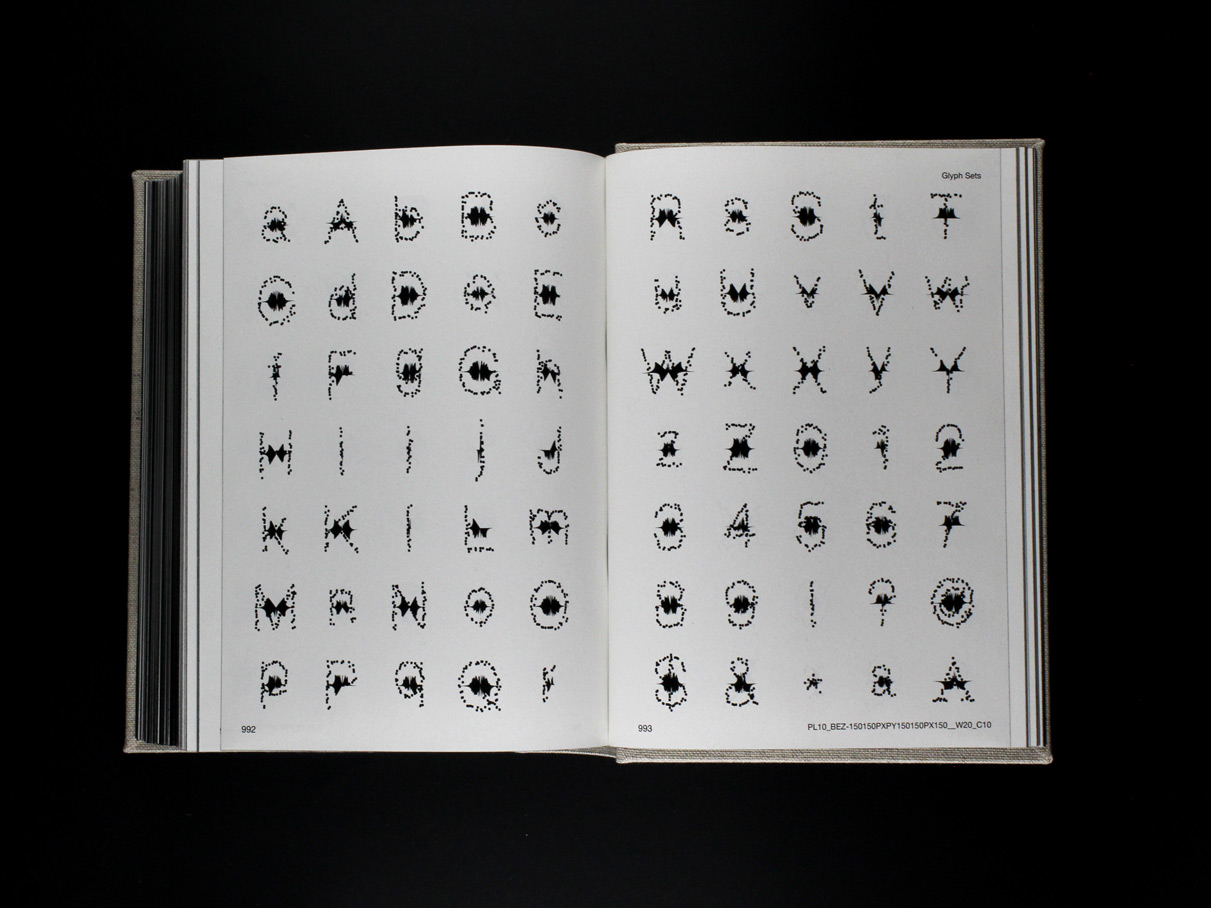
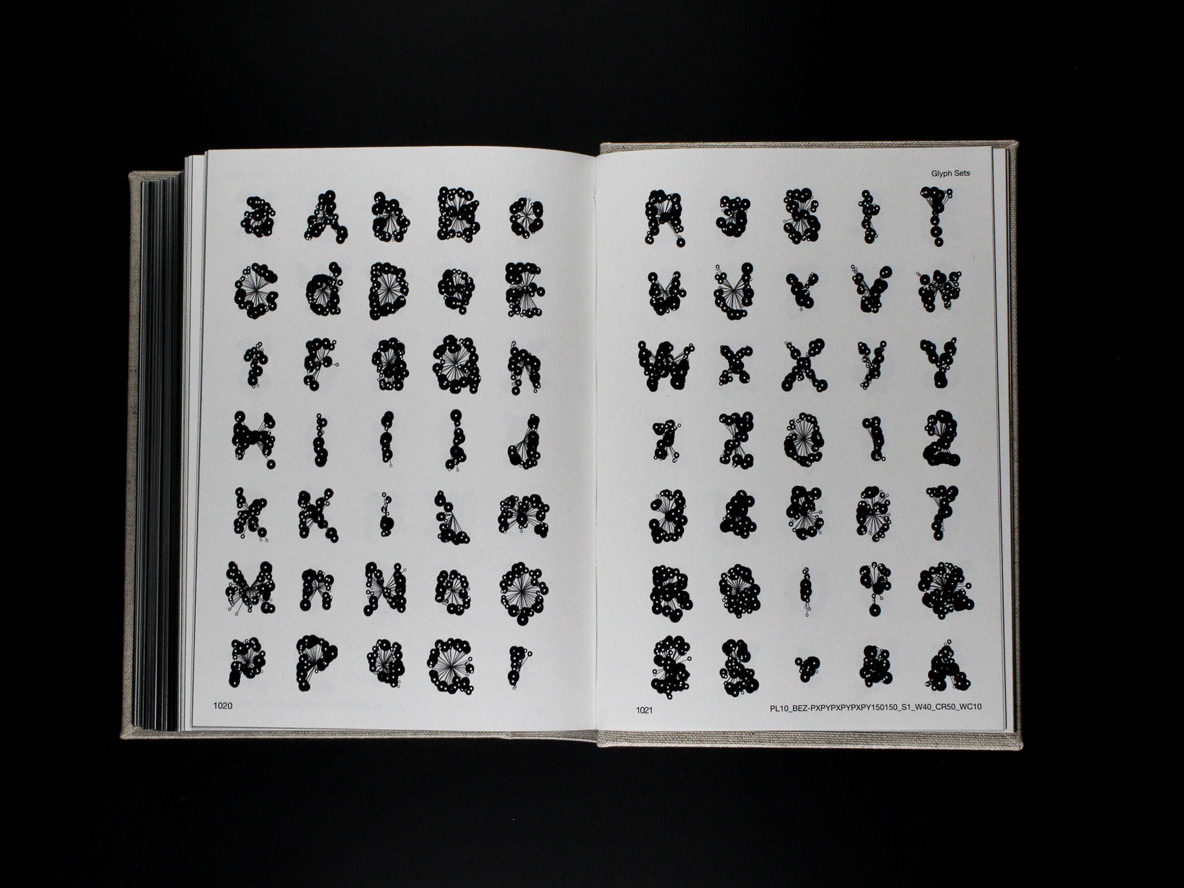
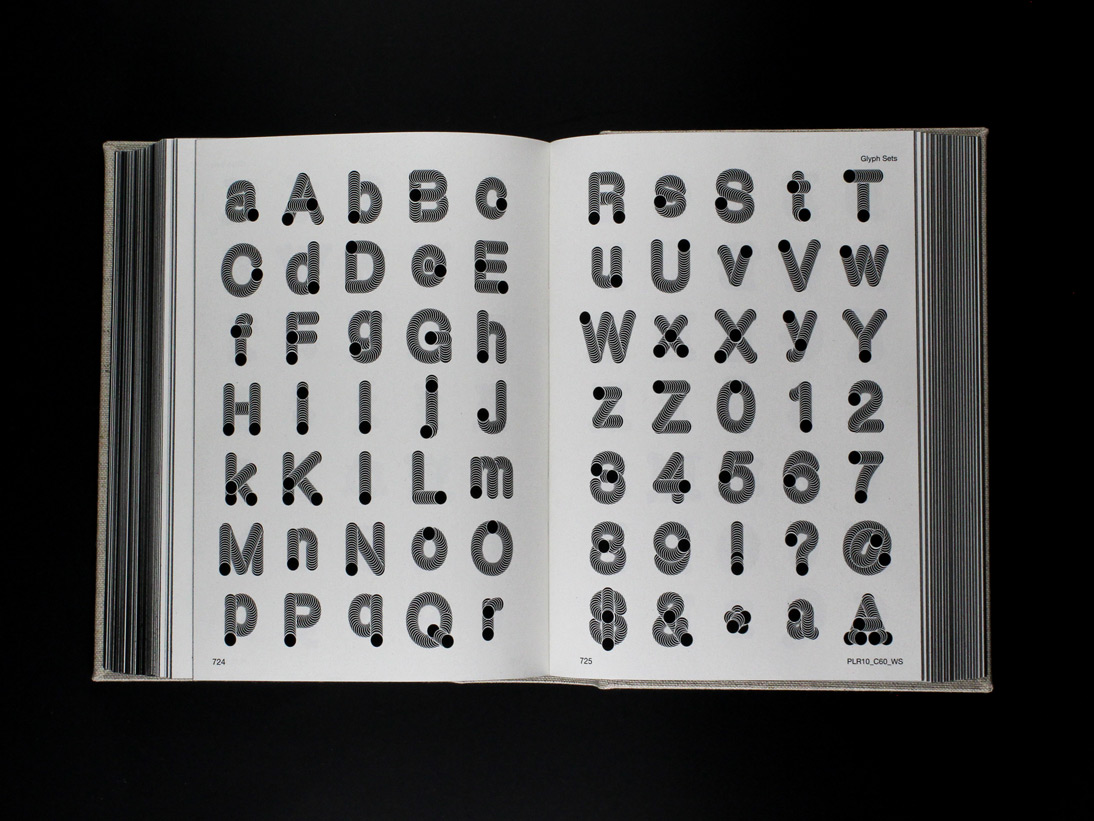
The findings were represented through two artefacts, with the first being a large-scale publication. Using scripts, I built and semi-automated the publication layout process and completed it within four days.
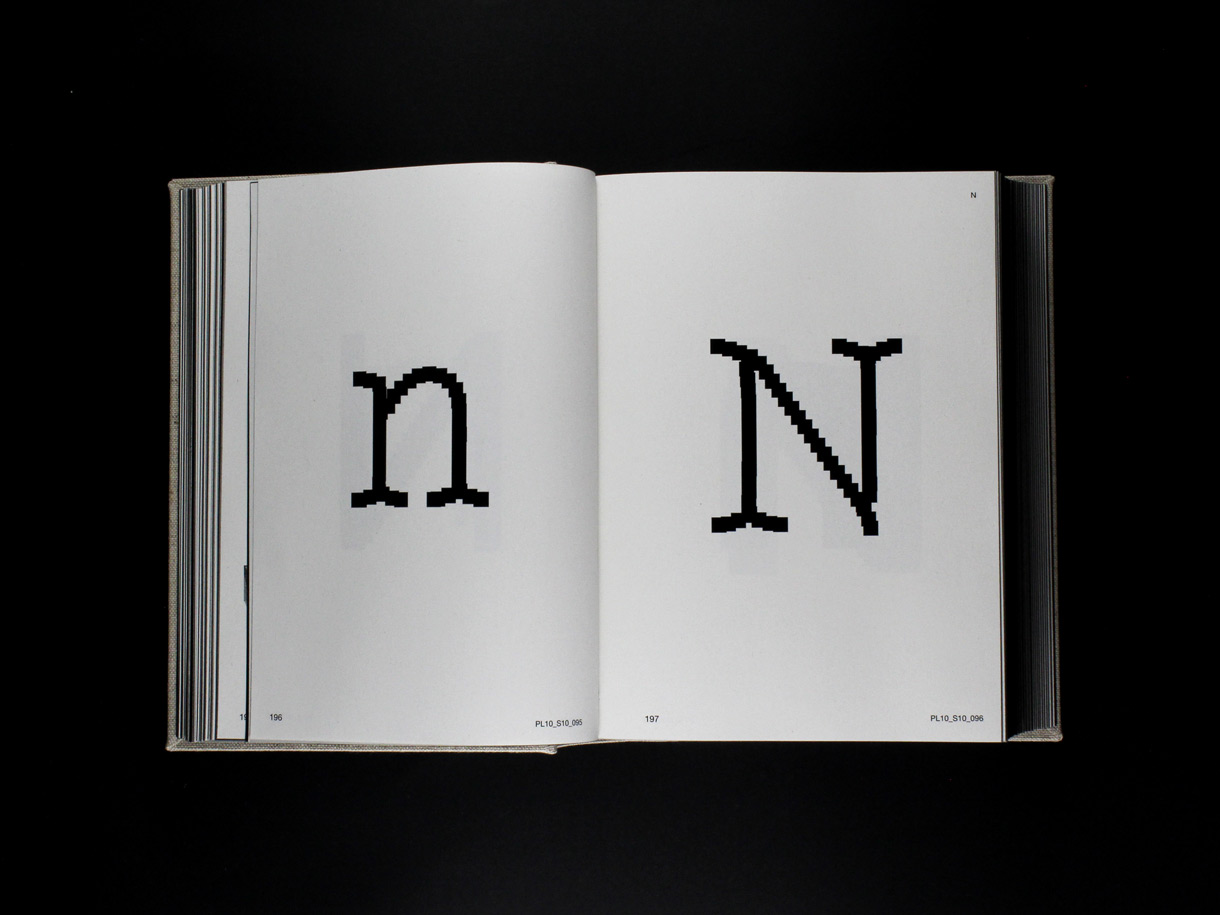
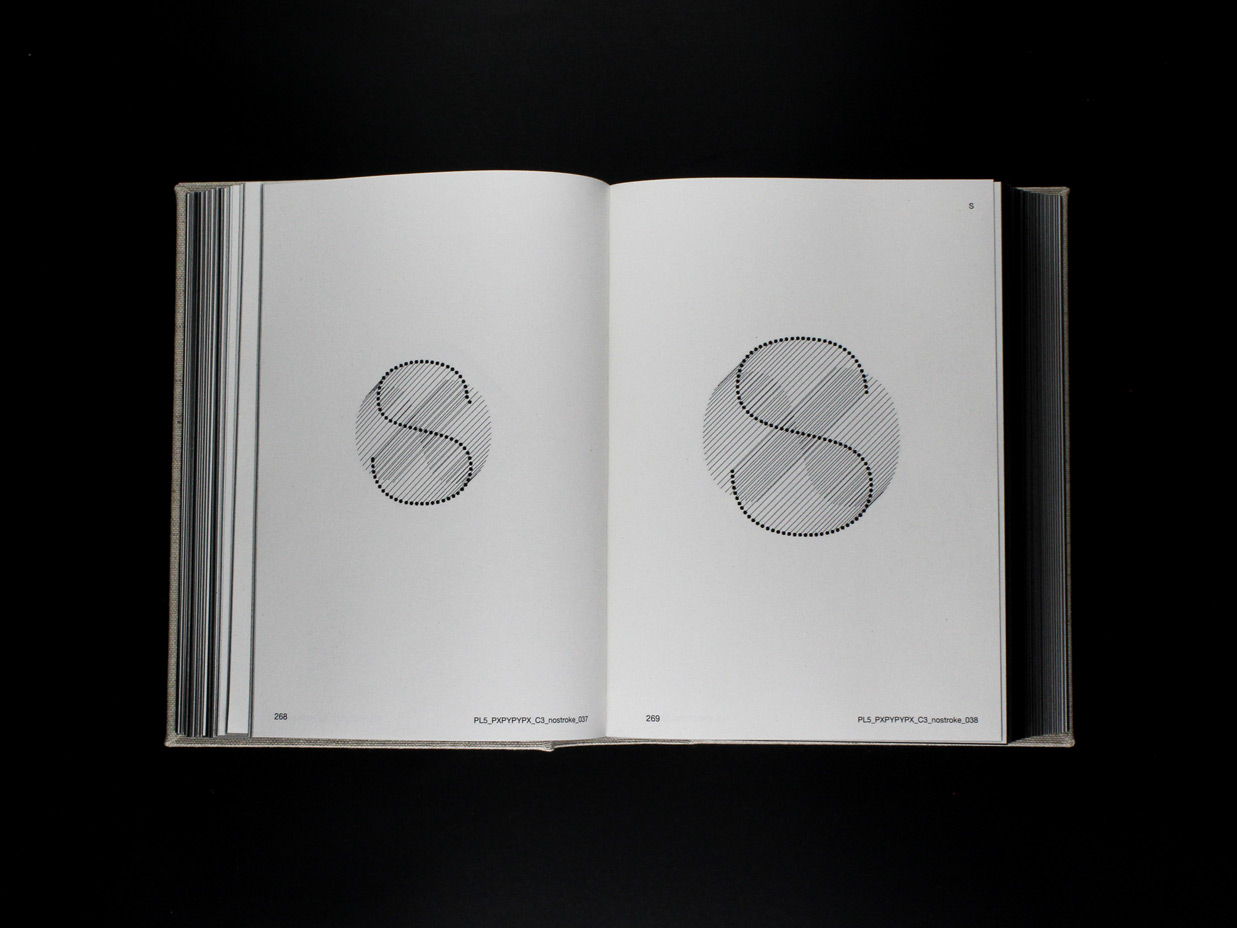
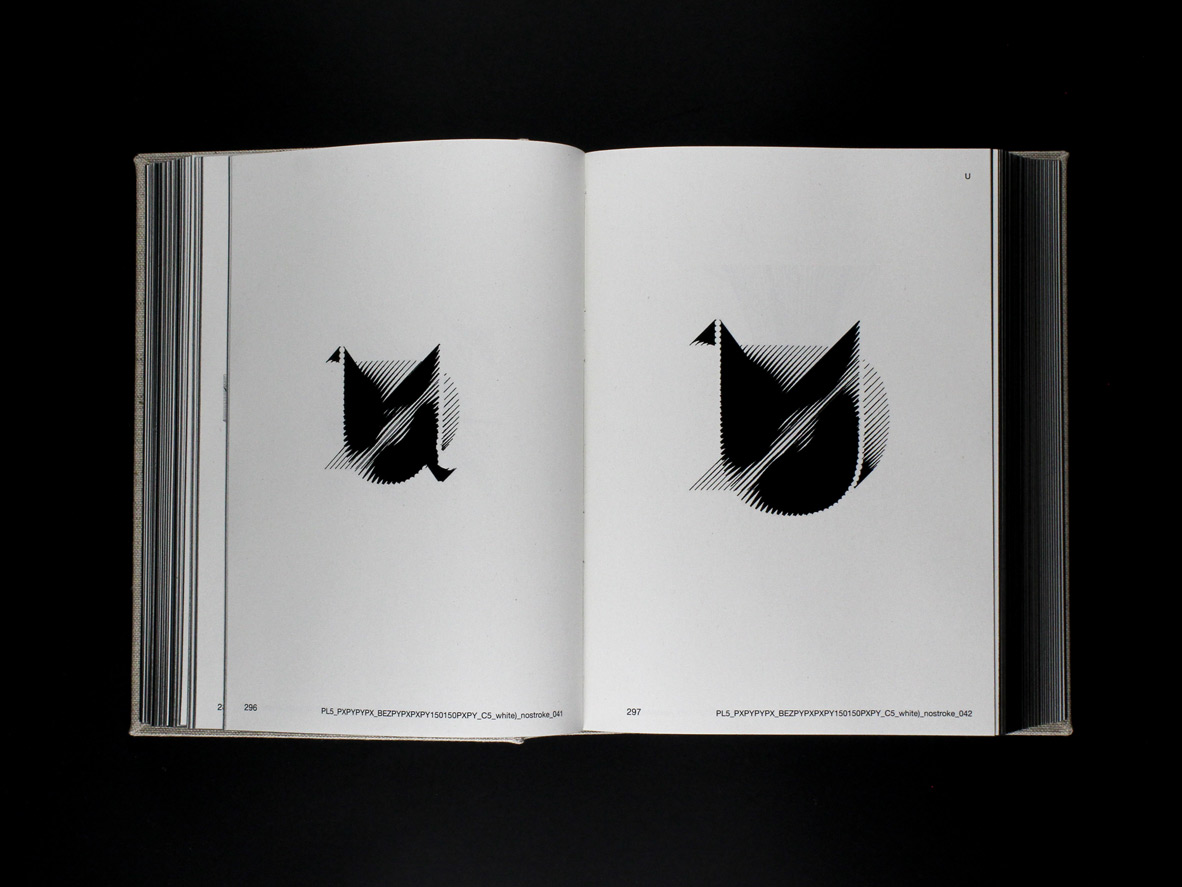
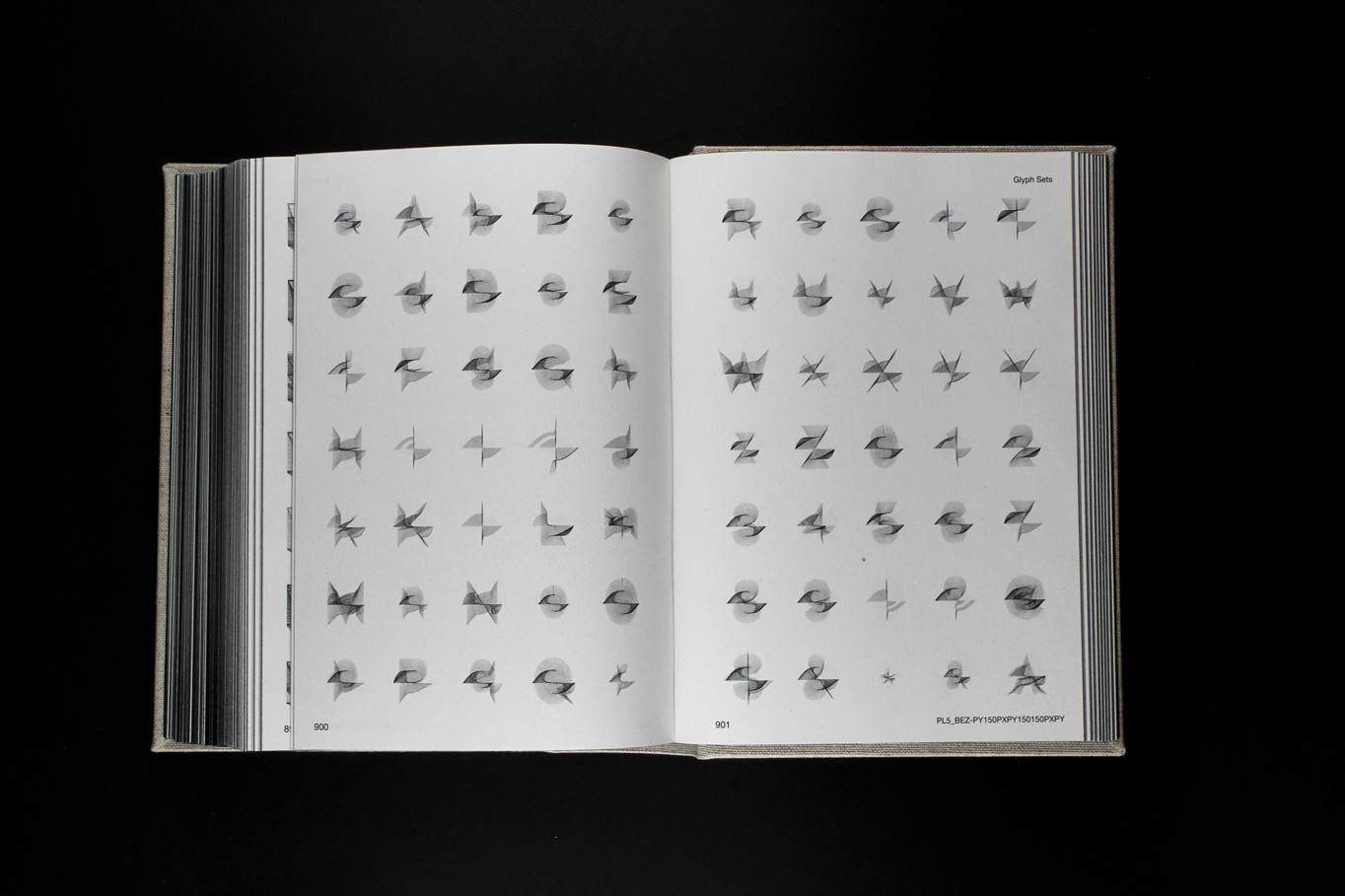
In total, 122 type families were developed and exported, including all alphanumeric characters and selected symbols in both serif and sans-serif styles. These were presented across 1028 pages, allowing readers to compare and contrast 16,592 characters within a consistent framework.
The publication also supported the broader argument for rematerialising typography. It draws on the idea that tangible design can hold greater value in sentiment and collectability than digital outputs alone, informed by the culture of printed type specimens and historical references like Pantographia (1799).